

What is the function of the jib on a construction crane?
Sep 19, 2025
Leave a message
The jib of a construction crane is an essential component that plays a pivotal role in the crane's overall functionality. As a leading construction crane supplier, we understand the importance of every part of these powerful machines, and the jib is no exception. In this blog post, we will delve into the functions of the jib on a construction crane, exploring its significance and how it contributes to the efficiency and safety of construction projects.
1. Definition and Types of Jibs
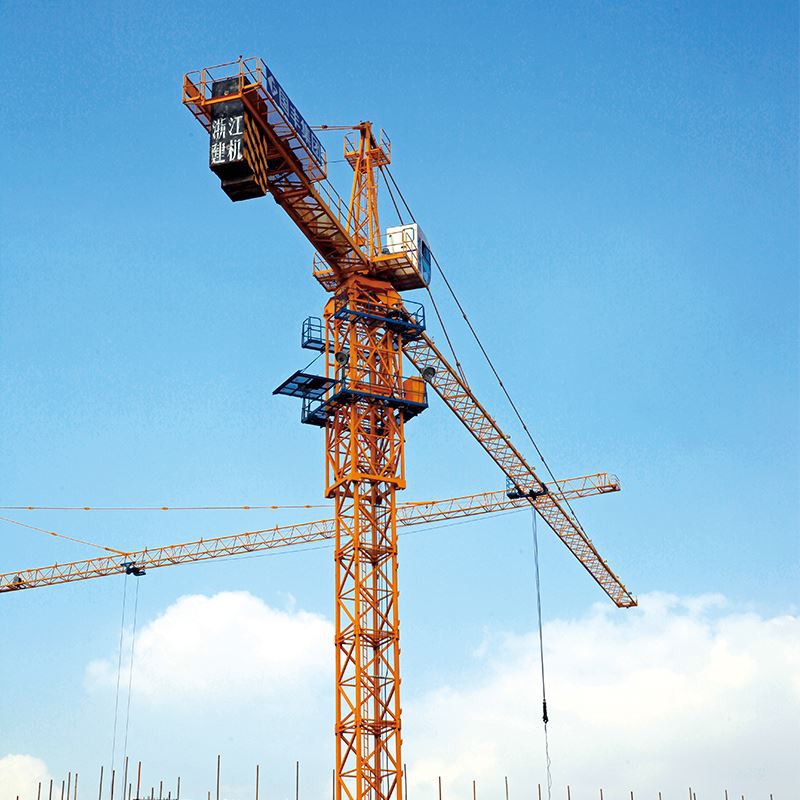
Before we discuss the functions, let's first define what a jib is. A jib is a horizontal or angled boom that extends from the top of the crane's mast. It is designed to support and move the load horizontally, allowing the crane to reach areas that would otherwise be inaccessible. There are several types of jibs commonly used in construction cranes, including luffing jibs, fixed jibs, and telescopic jibs.
- Luffing Jibs: These jibs can be raised or lowered (luffed) at an angle, which is particularly useful in congested construction sites where space is limited. The ability to adjust the angle of the jib allows the crane to avoid obstacles and work in confined areas. For example, in urban construction projects where there are adjacent buildings or structures, a luffing jib crane can be maneuvered to lift and place loads without interfering with the surroundings.
- Fixed Jibs: As the name suggests, fixed jibs are set at a specific angle and cannot be adjusted during operation. They are typically used in situations where the crane needs to cover a large, open area. Fixed jibs are often found on tower cranes used in high - rise construction projects, where they can reach long distances horizontally to place materials at various points on the building site.
- Telescopic Jibs: Telescopic jibs can extend or retract in length, providing flexibility in terms of the crane's reach. This type of jib is commonly used on mobile cranes, which need to be able to adjust their reach depending on the specific requirements of the job. For instance, when working on a project with varying distances between the crane and the load, a telescopic jib can be extended or retracted to optimize the lifting operation.
2. Primary Functions of the Jib
2.1 Load Extension
One of the most fundamental functions of the jib is to extend the reach of the crane. By providing a horizontal or angled extension from the mast, the jib allows the crane to lift and move loads to areas that are far from the base of the crane. This is crucial in construction projects, where materials need to be placed at specific locations on the building site. For example, in a large - scale commercial building project, the jib of a tower crane can reach across the entire construction area, enabling the efficient placement of steel beams, concrete panels, and other heavy materials.
2.2 Load Placement
The jib also plays a vital role in precise load placement. With the ability to move the load horizontally, the jib allows the crane operator to position the load accurately at the desired location. This is especially important in construction projects where the placement of materials needs to be exact, such as in the installation of pre - fabricated components or the assembly of complex structures. The operator can use the controls to move the jib left or right, forward or backward, ensuring that the load is placed with high precision.
2.3 Increased Lifting Capacity in Some Configurations
In certain crane configurations, the jib can contribute to an increase in the crane's overall lifting capacity. For example, in a tower crane with a luffing jib, by adjusting the angle of the jib, the crane can optimize its stability and lifting capacity. When the jib is luffed to a steeper angle, the crane can lift heavier loads closer to the mast. This is because the angle of the jib affects the distribution of the load and the forces acting on the crane's structure. By carefully adjusting the jib angle, the crane can operate within its safe working limits while handling larger loads.
3. Impact on Construction Efficiency
The jib significantly enhances the efficiency of construction projects. Its ability to extend the reach and accurately place loads reduces the need for multiple cranes or additional equipment to move materials around the site. This not only saves time but also reduces costs associated with equipment rental and labor. For example, in a high - rise construction project, a single tower crane with a long jib can cover a large area, eliminating the need for multiple smaller cranes to be used simultaneously. This streamlines the construction process and allows for faster completion of the project.
Moreover, the flexibility provided by different types of jibs enables cranes to adapt to various construction scenarios. Luffing jibs, for instance, can be used in areas with limited space, such as in urban construction sites or renovation projects. This adaptability means that construction companies can use a single crane for multiple tasks, increasing the overall productivity of the project.
4. Safety Considerations
The jib also has a significant impact on the safety of construction operations. Proper design and maintenance of the jib are crucial to ensure the safe operation of the crane. The jib must be able to withstand the loads it is designed to carry, as well as the forces exerted on it during operation, such as wind forces. Regular inspections and maintenance of the jib, including checking for structural integrity, wear and tear, and proper functioning of the controls, are essential to prevent accidents.
In addition, the jib's design should take into account factors such as visibility for the crane operator. A well - designed jib allows the operator to have a clear view of the load and the surrounding area, reducing the risk of collisions and other safety hazards. For example, some jibs are designed with features such as angled sections or open lattice structures to improve visibility.
5. Our Product Offerings
As a construction crane supplier, we offer a wide range of cranes with different types of jibs to meet the diverse needs of our customers. Our Pointed Tower Crane is equipped with a high - quality fixed jib, which provides excellent reach and stability for high - rise construction projects. The fixed jib is designed to withstand heavy loads and is ideal for projects where a large, open area needs to be covered.
Our New Hammerhead Tower Crane features a unique jib design that combines the advantages of both fixed and luffing jibs. This crane offers flexibility in terms of load placement and reach, making it suitable for a variety of construction scenarios. Whether you are working on a large commercial building or a residential project, our hammerhead tower crane can provide the performance and reliability you need.
For projects that require a crane with adjustable reach, our 16t Construction Crane Machine comes with a telescopic jib. This allows for easy adjustment of the crane's reach, depending on the specific requirements of the job. The telescopic jib provides versatility and efficiency, making it a popular choice for mobile crane applications.
6. Conclusion
In conclusion, the jib is a critical component of a construction crane, with functions that range from load extension and placement to contributing to the crane's lifting capacity and overall efficiency. Its design and operation have a significant impact on the safety and productivity of construction projects. As a construction crane supplier, we are committed to providing high - quality cranes with well - designed jibs to meet the needs of our customers. If you are in the market for a construction crane, we invite you to contact us to discuss your specific requirements and explore our range of products. Our team of experts is ready to assist you in finding the right crane for your project and ensuring its successful operation.

References
- "Crane Handbook: Operation, Maintenance, and Safety" by William W. Gleason
- "Construction Equipment for Engineers, Estimators, and Owners" by Frank R. Driscoll
- Industry standards and guidelines related to construction crane design and operation.