

How to troubleshoot common problems of the Flat Head Tower Crane 8T?
Sep 25, 2025
Leave a message
As a supplier of the Flat Head Tower Crane 8T, I've encountered numerous common problems that operators and maintenance teams often face. In this blog, I'll share some effective troubleshooting methods for these issues, aiming to help you keep your crane running smoothly and efficiently.
Electrical System Failures
One of the most common problems with the Flat Head Tower Crane 8T is electrical system failures. These can manifest in various ways, such as the crane not starting, malfunctioning control panels, or intermittent power loss.
Faulty Wiring
Faulty wiring is a frequent culprit behind electrical issues. Over time, wires can become frayed, damaged, or loose due to vibration, abrasion, or environmental factors. To troubleshoot this problem, start by visually inspecting all the wiring connections. Look for signs of wear, such as exposed wires, burned insulation, or loose terminals. If you find any damaged wires, they should be replaced immediately. Use high - quality replacement wires that meet the crane's electrical specifications. For connections, make sure they are tight and secure. You can use a multimeter to check for continuity in the wires. If there is no continuity, it indicates a break in the wire, and it needs to be fixed.
Malfunctioning Control Panel
The control panel is the nerve center of the crane, and any issues with it can lead to operational problems. If the control panel is not responding correctly or displaying error messages, first check the power supply to the panel. Ensure that the circuit breakers are not tripped and that there is a stable voltage supply. Next, check the fuses in the control panel. A blown fuse can cause the panel to malfunction. Replace any blown fuses with the correct rating. If the problem persists, it may be due to a software glitch or a hardware failure in the control panel. In such cases, it's advisable to contact a professional technician who can diagnose and repair the control panel. You can refer to the Building Crane for more detailed electrical system information.
Hoisting and Lifting Problems
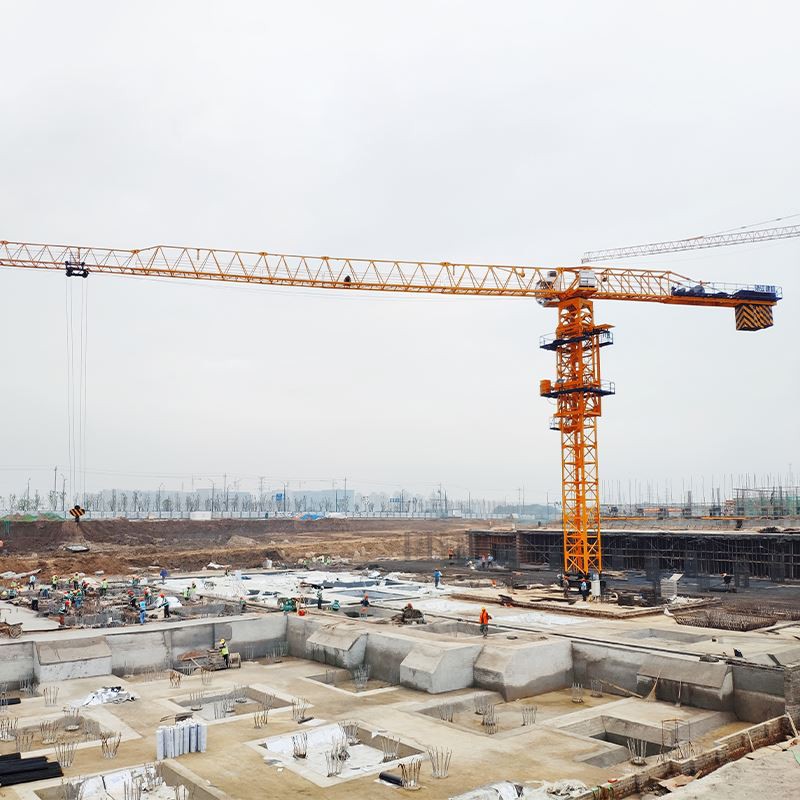
The hoisting and lifting functions are crucial for the operation of the Flat Head Tower Crane 8T. Problems in this area can range from slow hoisting speeds to the inability to lift loads.

Low Hoisting Speed
If the hoist is operating at a slower speed than normal, several factors could be the cause. First, check the hydraulic system if your crane is hydraulically powered. Low hydraulic fluid levels can result in reduced power and slower hoisting speeds. Check the hydraulic fluid reservoir and top it up if necessary. Also, look for any signs of hydraulic fluid leaks, such as puddles under the crane or wet spots on the hydraulic hoses. Leaks need to be repaired promptly.
Another possible cause is a worn - out hoist motor. Over time, the motor's performance can degrade, leading to reduced speed. Check the motor's bearings, brushes (if it's a brushed motor), and windings. A damaged bearing can cause increased friction, which slows down the motor. Replace any worn - out components as needed.
Inability to Lift Loads
If the crane is unable to lift the specified load, it could be due to an overloaded condition. Check the load weight and ensure that it does not exceed the crane's rated capacity. If the load is within the capacity, check the brake system. A malfunctioning brake can prevent the hoist from lifting the load properly. Inspect the brake pads for wear and tear. If the brake pads are worn out, they should be replaced. Also, check the brake adjustment. Incorrect brake adjustment can cause the brakes to engage too tightly or not tightly enough, affecting the hoisting operation. For more advanced hoisting and lifting solutions, you can explore the New Flat Head Tower Crane.
Slewing and Trolley Movement Issues
The slewing and trolley movement are essential for positioning the load accurately. Problems in these areas can make it difficult to operate the crane effectively.
Erratic Slewing
If the crane's slewing function is erratic, such as jerky movements or uneven rotation, it may be due to a problem with the slewing drive system. Check the gearbox in the slewing drive. Look for signs of gear wear, such as excessive noise or metal shavings in the gear oil. If there is significant gear wear, the gearbox may need to be repaired or replaced.
Also, check the slewing brake. A malfunctioning brake can cause the slewing to be unstable. Ensure that the brake is properly adjusted and that the brake pads are in good condition. If the problem persists, it could be an issue with the slewing motor or the control system for the slewing function.
Trolley Movement Problems
If the trolley is not moving smoothly or is getting stuck, first check the track. The track may be dirty, have debris on it, or be misaligned. Clean the track thoroughly and remove any obstacles. Check the alignment of the track using a level and make any necessary adjustments.
Next, inspect the trolley wheels. Worn - out or damaged wheels can cause the trolley to move unevenly or get stuck. Replace any damaged wheels. Also, check the drive system for the trolley, such as the motor and the gears. Make sure that the motor is functioning properly and that the gears are in good condition. You can find more information about the trolley and slewing systems on the ZJT6019 Flat Top Tower Crane.
Structural and Mechanical Wear
Over time, the structural and mechanical components of the crane can experience wear and tear, which can affect its safety and performance.
Structural Cracks
Periodically inspect the crane's structure for cracks. Cracks can develop in the mast, jib, or other structural components due to stress, fatigue, or overloading. Use non - destructive testing methods, such as ultrasonic testing or magnetic particle testing, to detect cracks that may not be visible to the naked eye. If you find a crack, it's crucial to take immediate action. Small cracks can sometimes be repaired by welding, but larger cracks may require the replacement of the affected structural component.
Worn - out Mechanical Components
Components such as pins, bushings, and bearings are subject to wear during normal operation. Check these components regularly for signs of wear, such as excessive play or noise. Replace any worn - out components to prevent further damage to the crane. For example, if a pin is worn, it can cause misalignment in the crane's structure, which can lead to more serious problems over time.
Preventive Maintenance
To minimize the occurrence of these common problems, preventive maintenance is essential. Establish a regular maintenance schedule that includes daily, weekly, monthly, and annual inspections. During daily inspections, operators should check for obvious signs of damage, such as loose bolts, leaks, and abnormal noises. Weekly inspections can focus on more detailed checks, such as the condition of the electrical connections and the hydraulic system. Monthly inspections can involve more in - depth testing, such as load testing and structural inspections. Annual inspections should be carried out by a professional technician who can perform comprehensive tests and maintenance on the crane.
In conclusion, troubleshooting common problems of the Flat Head Tower Crane 8T requires a systematic approach. By understanding the possible causes of these problems and following the appropriate troubleshooting steps, you can keep your crane in good working condition. If you encounter any problems that you are unable to solve, don't hesitate to contact us. We are a reliable supplier of the Flat Head Tower Crane 8T, and we are ready to provide you with professional support and solutions. Whether you are looking to purchase a new crane or need assistance with maintenance and troubleshooting, we are here to help. Contact us for more information and to start a procurement negotiation.
References
- Crane Operation and Maintenance Manual
- Industry Standards for Tower Crane Safety and Performance