

What is the ground bearing capacity requirement for the Flat Head Tower Crane 8T?
Jun 11, 2025
Leave a message
As a supplier of the Flat Head Tower Crane 8T, understanding the ground bearing capacity requirement is crucial for ensuring the safe and efficient operation of our equipment. In this blog, I will delve into the details of what ground bearing capacity is, why it matters for the Flat Head Tower Crane 8T, and how to determine the appropriate ground bearing capacity for this specific type of crane.
What is Ground Bearing Capacity?
Ground bearing capacity refers to the maximum load per unit area that the soil can safely support without experiencing excessive settlement or failure. It is a fundamental parameter in geotechnical engineering and plays a vital role in the design and installation of structures, including tower cranes. The ground bearing capacity is influenced by several factors, such as the type of soil, its density, moisture content, and the depth of the soil layer.
Why Ground Bearing Capacity Matters for the Flat Head Tower Crane 8T
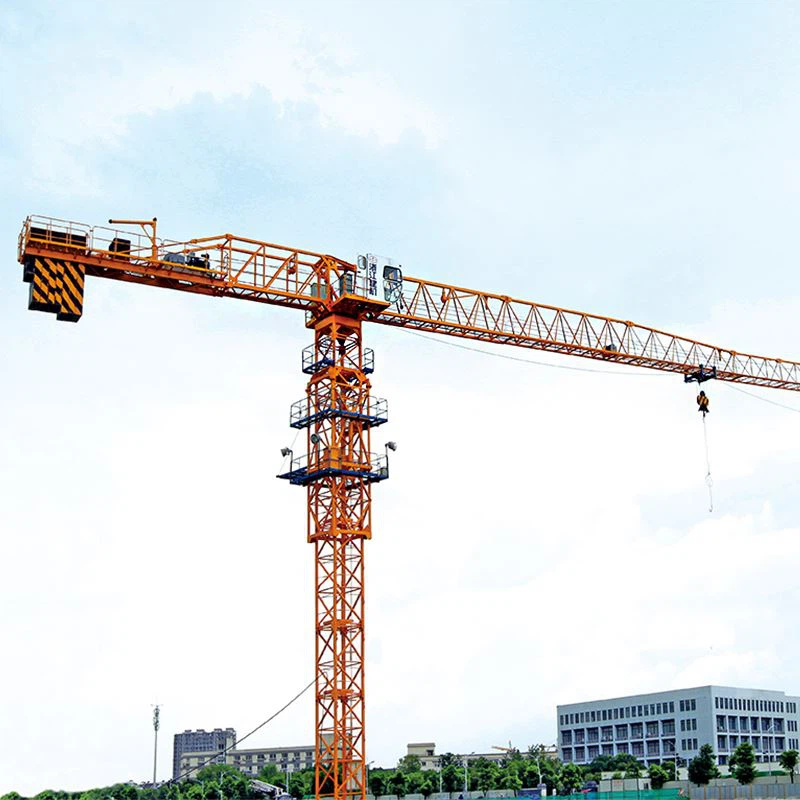
The Flat Head Tower Crane 8T is a heavy - duty piece of equipment used in various construction projects, including high - rise building construction, bridge building, and industrial infrastructure development. These cranes are designed to lift and move heavy loads, which exert significant forces on the ground through their foundations.
If the ground bearing capacity is insufficient, the crane's foundation may sink or tilt, leading to instability. This instability can cause the crane to tip over, resulting in severe damage to the equipment, the construction site, and potentially causing harm to workers. Therefore, ensuring that the ground has adequate bearing capacity is essential for the safety of the crane operation and the overall construction project.
Factors Affecting Ground Bearing Capacity for the Flat Head Tower Crane 8T
1. Crane Load
The total load exerted by the Flat Head Tower Crane 8T includes its own weight, the weight of the counterweights, and the maximum load it can lift. The 8T in the crane's name indicates its maximum lifting capacity of 8 tons. However, the actual load on the ground is a combination of static and dynamic loads. Dynamic loads can occur during lifting, swinging, and lowering operations, which can increase the effective load on the ground.
2. Soil Type
Different soil types have different bearing capacities. For example, dense, well - compacted gravel or rock can support much higher loads compared to soft clay or loose sand. Clay soils are highly compressible and their bearing capacity can be significantly affected by changes in moisture content. Sandy soils, on the other hand, may experience liquefaction under dynamic loads, reducing their bearing capacity.
3. Foundation Design
The design of the crane's foundation also affects the ground bearing capacity requirements. A larger foundation area can distribute the load over a greater area, reducing the pressure on the ground. Common foundation types for tower cranes include slab foundations and pile foundations. Slab foundations are suitable for soils with relatively high bearing capacity, while pile foundations are often used in areas with soft soils to transfer the load to deeper, more stable soil layers.
Determining the Ground Bearing Capacity Requirement
1. Soil Investigation
Before installing the Flat Head Tower Crane 8T, a comprehensive soil investigation should be conducted. This typically involves drilling boreholes at the crane installation site to collect soil samples. Laboratory tests are then performed on these samples to determine the soil's properties, such as its type, density, moisture content, and shear strength. Based on these test results, the geotechnical engineer can estimate the ground bearing capacity of the site.
2. Crane Manufacturer's Specifications
The crane manufacturer provides detailed specifications regarding the ground bearing capacity requirements for the Flat Head Tower Crane 8T. These specifications take into account the crane's design, weight, and load - bearing characteristics. It is essential to follow these guidelines to ensure the safe operation of the crane.
3. Calculation of Loads
The total load on the ground needs to be calculated accurately. This includes the dead load (the weight of the crane and its components) and the live load (the maximum lifting load). Additionally, dynamic factors such as impact and wind loads should also be considered. Once the total load is determined, the required ground bearing capacity can be calculated by dividing the total load by the area of the crane's foundation.
Meeting the Ground Bearing Capacity Requirement
1. Soil Improvement
If the soil at the installation site has insufficient bearing capacity, soil improvement techniques can be employed. These may include compaction, grouting, or the addition of stabilizing agents. Compaction involves using heavy machinery to compress the soil, increasing its density and bearing capacity. Grouting involves injecting a cement - based or chemical grout into the soil to fill voids and improve its strength.
2. Foundation Design Modification
If soil improvement is not feasible or cost - effective, the foundation design can be modified. For example, a larger foundation slab can be used to distribute the load over a greater area. Alternatively, pile foundations can be installed to transfer the load to deeper, more stable soil layers.

Importance of Compliance
Compliance with the ground bearing capacity requirements is not only a matter of safety but also a legal requirement in many regions. Construction regulations often mandate that proper geotechnical investigations be carried out and that cranes are installed on foundations that can safely support the loads. Failure to comply with these requirements can result in fines, project delays, and legal liabilities.
Conclusion
In conclusion, the ground bearing capacity requirement for the Flat Head Tower Crane 8T is a critical factor that must be carefully considered during the crane installation process. As a supplier, we are committed to providing our customers with all the necessary information and support to ensure that the crane is installed on a foundation with adequate bearing capacity.
If you are involved in a construction project and are considering the use of our Flat Head Tower Crane 8T, we encourage you to visit our websites Construction Industry Cranes, Building Construction Tower Crane, and Static Tower Crane for more detailed information. Our team of experts is ready to assist you in determining the appropriate ground bearing capacity for your project and ensuring a safe and successful crane operation. If you have any questions or are interested in purchasing our Flat Head Tower Crane 8T, please feel free to contact us for a detailed discussion and procurement negotiation.
References
- Bowles, J. E. (1996). Foundation analysis and design (5th ed.). McGraw - Hill.
- Coduto, D. P., Kitch, J. W., & Duncan, J. M. (2011). Geotechnical engineering: principles and practices. Wiley.
- International Organization for Standardization (ISO). (2019). ISO 4301 - 1:2019 Cranes - Classification - Part 1: General.