

What is the braking system of a static tower crane like?
Nov 07, 2025
Leave a message
Hey there! As a supplier of static tower cranes, I often get asked about the braking systems of these beasts. So, I thought I'd take a moment to break it down for you and give you the lowdown on what makes these systems tick.
First off, let's talk about why brakes are so important on a static tower crane. These cranes are used to lift and move heavy loads, sometimes hundreds or even thousands of pounds at a time. Without a reliable braking system, the crane could easily lose control of the load, leading to a potentially dangerous situation. That's why the braking system is one of the most critical components of any static tower crane.

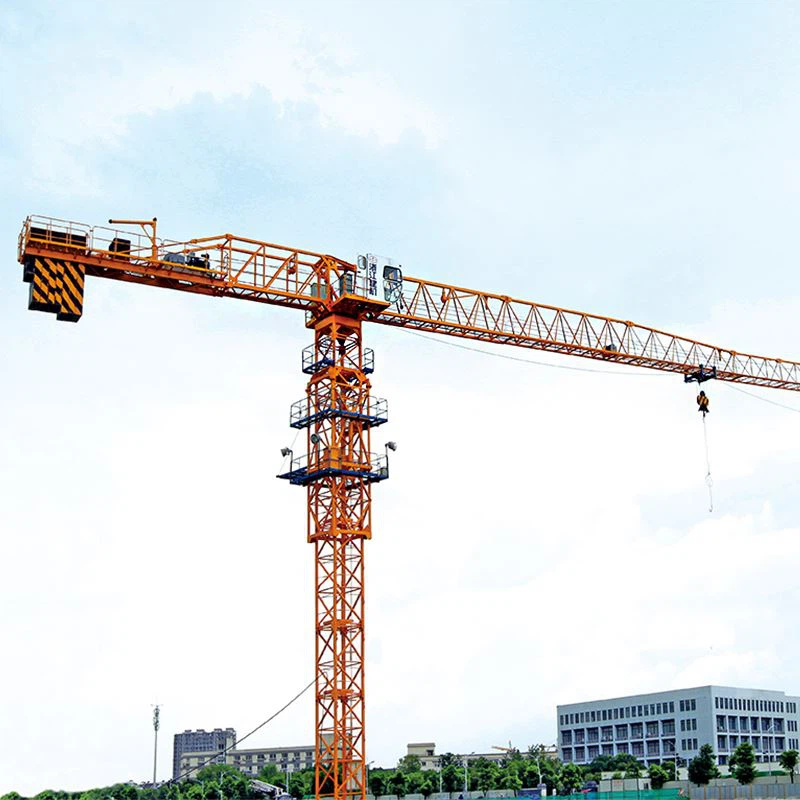
There are two main types of brakes used on static tower cranes: mechanical brakes and hydraulic brakes. Let's start with mechanical brakes. These are the most common type of brakes used on smaller cranes and are typically found on the hoist and trolley mechanisms. Mechanical brakes work by using friction to slow down or stop the movement of the crane. They usually consist of a brake drum or disc, a brake shoe or pad, and a mechanism to apply pressure to the shoe or pad.
When the operator wants to stop the crane, they activate the brake mechanism, which applies pressure to the brake shoe or pad. This creates friction between the shoe or pad and the brake drum or disc, which slows down or stops the movement of the crane. Mechanical brakes are relatively simple and reliable, but they do require regular maintenance to ensure that they are working properly.
Hydraulic brakes, on the other hand, are used on larger cranes and are typically found on the slewing and luffing mechanisms. Hydraulic brakes work by using fluid pressure to apply force to the brake pads or shoes. They usually consist of a hydraulic cylinder, a brake caliper or drum, and a hydraulic pump or valve.
When the operator wants to stop the crane, they activate the hydraulic pump or valve, which sends fluid pressure to the hydraulic cylinder. The cylinder then applies force to the brake caliper or drum, which creates friction between the brake pads or shoes and the caliper or drum. This slows down or stops the movement of the crane. Hydraulic brakes are more complex than mechanical brakes, but they offer greater stopping power and are more reliable in heavy-duty applications.
In addition to mechanical and hydraulic brakes, some static tower cranes also use electrical brakes. These brakes work by using an electromagnetic field to apply force to the brake pads or shoes. They are typically found on the hoist and trolley mechanisms and are used in conjunction with mechanical or hydraulic brakes.
Electrical brakes are very reliable and offer precise control over the movement of the crane. They are also very energy-efficient, as they only use power when the brakes are engaged. However, they are more expensive than mechanical or hydraulic brakes and require more maintenance.
Now that you know the different types of brakes used on static tower cranes, let's talk about some of the features and benefits of a good braking system. One of the most important features of a braking system is its ability to hold the load in place. This is especially important when the crane is lifting a heavy load or when it is operating in windy conditions. A good braking system should be able to hold the load in place without any slippage or movement.
Another important feature of a braking system is its ability to stop the crane quickly and safely. This is especially important in an emergency situation, such as when the operator needs to stop the crane suddenly to avoid a collision or other hazard. A good braking system should be able to stop the crane within a short distance and without any sudden jerks or movements.
In addition to these features, a good braking system should also be easy to maintain and operate. It should be designed to be durable and reliable, and it should be able to withstand the harsh conditions of the construction site. A good braking system should also be easy to access and service, so that maintenance can be performed quickly and efficiently.
At our company, we offer a wide range of static tower cranes with different types of braking systems. Whether you need a small crane for a residential construction project or a large crane for a commercial construction project, we have the right crane for you. Our cranes are designed to be reliable, efficient, and easy to operate, and they are backed by our team of experienced technicians and customer service representatives.
If you're in the market for a new static tower crane, I encourage you to check out our website at New Flat Head Tower Crane. We have a wide range of cranes to choose from, including Construction Industry Cranes and Topless Tower Crane ZJT6018. Our website also provides detailed information about our cranes, including their specifications, features, and benefits.
If you have any questions or would like to learn more about our static tower cranes, please don't hesitate to contact us. Our team of experts is always available to answer your questions and help you find the right crane for your needs. We look forward to hearing from you and helping you take your construction project to the next level.
References:
- Crane Industry Services. (n.d.). Crane Brakes: Types, Functions, and Maintenance. Retrieved from [Website URL]
- Construction Equipment Guide. (n.d.). Understanding Crane Brakes. Retrieved from [Website URL]
- OSHA. (n.d.). Cranes and Derricks in Construction. Retrieved from [Website URL]