

What are the different types of overload protection systems for construction tower cranes?
Dec 25, 2025
Leave a message
As a supplier of construction tower cranes, I understand the critical importance of overload protection systems in ensuring the safety and efficiency of these heavy - duty machines. In this blog, we'll delve into the different types of overload protection systems for construction tower cranes.
1. Mechanical Overload Protection Systems
Mechanical overload protection systems are among the oldest and most straightforward methods of protecting tower cranes from overloading. These systems rely on physical mechanisms to detect and prevent excessive loads.
One common type is the mechanical limit switch. These switches are typically installed at key points on the crane, such as the hoist drum or the boom. When the load exceeds a pre - set limit, the mechanical force exerted on the switch causes it to trip. For example, on the hoist drum, if the load is too heavy, the tension in the cable can actuate the limit switch, which then cuts off the power supply to the hoist motor. This prevents the crane from attempting to lift a load that is beyond its capacity, thereby protecting the crane's structural integrity and the safety of the operators.
Another mechanical protection device is the shear pin. A shear pin is a small, specially designed pin that is installed in a critical part of the crane's mechanism, often in the gearbox or the coupling. When the load on the crane reaches a dangerous level, the shear pin is designed to break. This breaks the connection between the power source and the load - bearing components, stopping the operation of the crane. The advantage of shear pins is their simplicity and reliability. However, they need to be replaced after they break, which can cause downtime.
2. Hydraulic Overload Protection Systems
Hydraulic systems are widely used in construction tower cranes for various functions, such as lifting, slewing, and luffing. Hydraulic overload protection systems take advantage of the properties of hydraulic fluids to protect the crane from overloading.
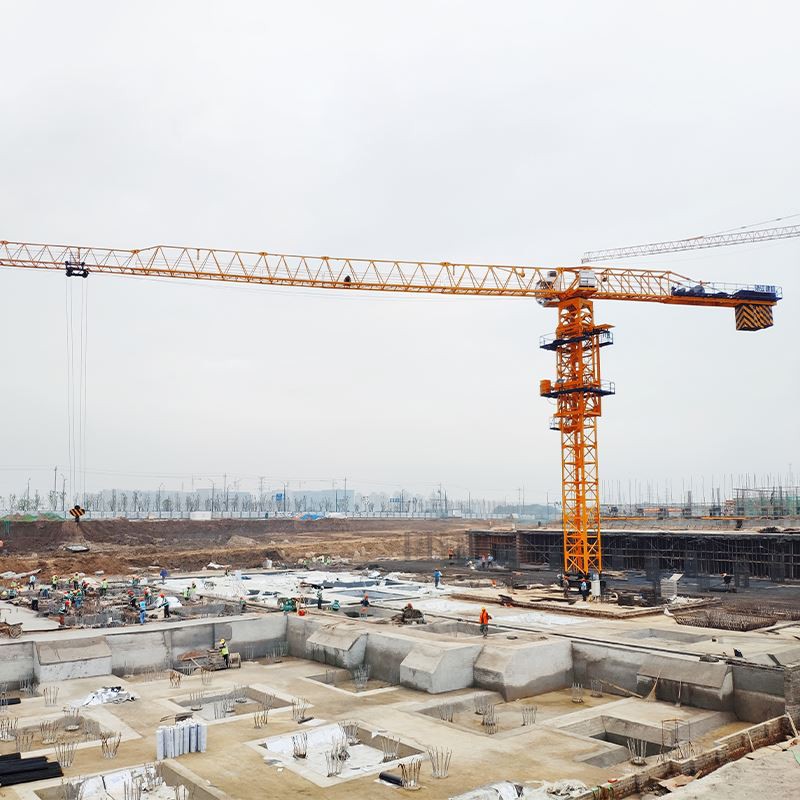

A hydraulic relief valve is a key component of these systems. It is installed in the hydraulic circuit. When the pressure in the hydraulic system exceeds a certain pre - determined level, which indicates an overload, the relief valve opens. This allows the hydraulic fluid to bypass the normal working path and flow back to the reservoir. By doing so, it prevents the excessive pressure from damaging the hydraulic components, such as cylinders and pumps.
Hydraulic accumulators can also play a role in overload protection. They store hydraulic energy under pressure. In case of a sudden overload, the accumulator can absorb the excess energy, reducing the peak pressure in the hydraulic system. This helps to protect the system from shock loads and extends the lifespan of the hydraulic components.
3. Electronic Overload Protection Systems
With the advancement of technology, electronic overload protection systems have become increasingly popular in modern construction tower cranes. These systems offer high precision and flexibility.
Load moment indicators (LMIs) are a common type of electronic overload protection. An LMI continuously monitors the load on the crane and its radius (the distance from the center of the crane to the load). Based on pre - programmed data about the crane's capacity at different radii, the LMI calculates the load moment. If the calculated load moment exceeds the safe limit, the LMI sends a signal to the crane's control system. This can trigger an alarm and, in some cases, automatically stop the crane's operation.
Weight sensors are another important part of electronic overload protection. These sensors are installed at strategic points on the crane, such as on the hook or the boom. They measure the actual weight of the load. The data from the weight sensors is sent to the control system. If the measured weight exceeds the rated capacity of the crane, the control system can take appropriate actions, such as shutting down the hoist or restricting the crane's movement.
4. Safety Features Integrated with Overload Protection
In addition to the above - mentioned overload protection systems, modern construction tower cranes often come with integrated safety features that work in conjunction with overload protection.
Anti - two - block protection is one such feature. When the hook block approaches the boom tip or the jib head, this system detects the proximity and stops the hoist from further lifting. This is important because if the hook block hits the boom tip, it can cause a sudden and dangerous overload on the crane's structure.
Wind speed sensors are also crucial. High winds can significantly affect the stability and load - carrying capacity of a tower crane. Wind speed sensors continuously monitor the wind speed. If the wind speed exceeds a safe limit, the crane's control system can restrict certain operations, such as slewing or luffing, to prevent the crane from being overloaded due to wind forces.
Our Tower Crane Offerings
At our company, we offer a wide range of high - quality construction tower cranes equipped with state - of - the - art overload protection systems. For example, our New Flat Head Tower Crane is designed with advanced electronic load moment indicators and weight sensors to ensure precise overload protection. It is suitable for various construction projects, from small - scale buildings to large - scale infrastructure developments.
The Topless Crane ZJT7531 is another excellent option. This crane features a combination of mechanical and hydraulic overload protection systems. The mechanical limit switches and hydraulic relief valves work together to provide reliable protection in different working conditions.
Our 70m Jib Length Tower Crane is a heavy - duty crane with a long reach. It is equipped with advanced anti - two - block protection and wind speed sensors in addition to its overload protection systems. This ensures that the crane can operate safely even in challenging environments.
Conclusion
Overload protection systems are essential for the safe and efficient operation of construction tower cranes. Whether it's mechanical, hydraulic, or electronic systems, each type has its own advantages and is designed to protect the crane from different types of overload situations. At our company, we are committed to providing tower cranes with the best - in - class overload protection features. If you are in the market for a construction tower crane, we invite you to contact us for a detailed discussion about your requirements and to explore our product offerings. We look forward to working with you to find the perfect crane solution for your construction projects.
References
- "Tower Crane Handbook" by Frank Brandl.
- "Construction Equipment Engineering" by Robert Peurifoy.
- Technical manuals of leading tower crane manufacturers.