

Can a 6t construction crane be used in areas with high seismic activity?
Dec 18, 2025
Leave a message
Hey there! As a supplier of 6t construction cranes, I often get asked if our cranes can be used in areas with high seismic activity. It's a super important question, and I'm here to break it down for you in plain English.
First up, let's talk about what makes seismic - active areas so tricky. These places are at risk of earthquakes, which can shake the ground vigorously. The ground movement during an earthquake can put a ton of stress on any structure, including construction cranes. When the earth starts to tremble, the forces acting on the crane can be unpredictable. There are horizontal and vertical forces that can cause the crane to sway, tip over, or even break apart if it's not designed to handle them.
Now, our 6t construction cranes are built with some pretty solid features. We use high - quality materials that are strong and durable. The steel we use has a high yield strength, which means it can withstand a fair amount of stress before it deforms. The crane's base is designed to be stable. We've engineered it to have a wide footprint, which helps distribute the weight of the crane and the load it's carrying evenly. This stability is crucial, especially in areas where the ground might shift.
But that's not all. We also have a sophisticated control system in our cranes. This system can detect any unusual movements or stresses on the crane. If it senses that the forces acting on the crane are getting close to dangerous levels, it can automatically adjust the crane's operations. For example, it can slow down the movement of the boom or stop the lifting process altogether to prevent any damage.
However, just because our 6t cranes have these features doesn't mean they're a one - size - fits - all solution for high - seismic areas. The intensity of seismic activity varies from one place to another. Some areas might experience mild tremors every now and then, while others could be hit by major earthquakes with high magnitudes.
In areas with low to moderate seismic activity, our 6t cranes can work just fine. The built - in stability and the control system can handle the relatively smaller forces generated during these tremors. But in regions where the seismic risk is extremely high, we might need to take some extra precautions.
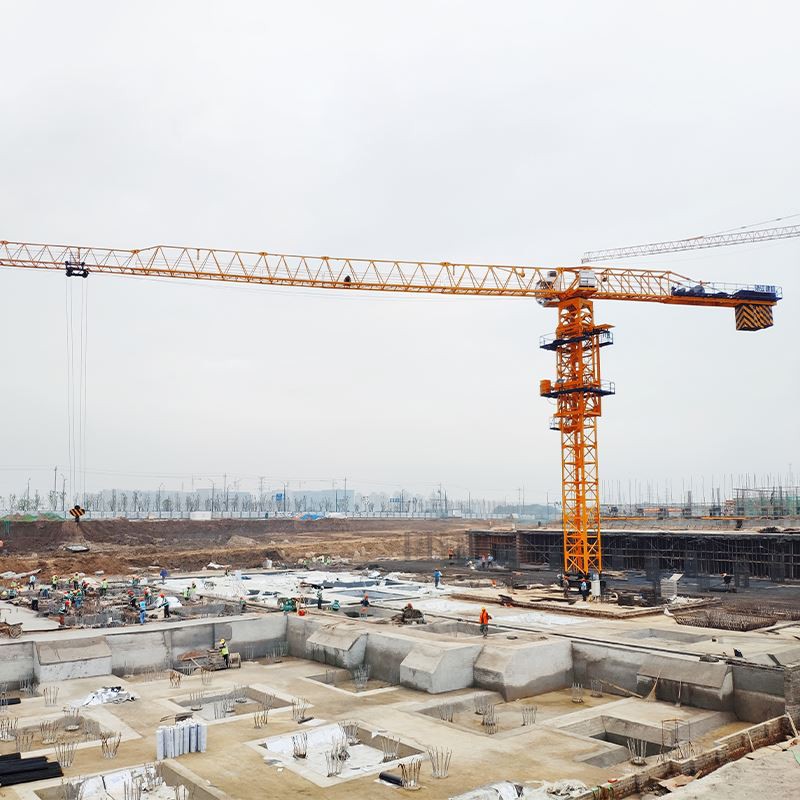

One option is to install additional seismic dampers on the crane. These dampers are like shock absorbers. They can absorb and dissipate the energy generated during an earthquake, reducing the stress on the crane. Another approach is to do a detailed site - specific analysis. This involves studying the geology of the area, the expected seismic wave patterns, and the historical earthquake data. Based on this analysis, we can customize the crane's design to make it more suitable for that particular location.
Let's take a look at some similar products that might also be of interest. If you're looking for something more heavy - duty, check out our 10t Construction Tower Crane. It's a beast when it comes to lifting heavy loads and is also built with some seismic - resistant features. Also, our New Flat Head Tower Crane is a great option for those who need a crane that's easy to assemble and operate. And if height is your concern, the Tall Construction Crane might be the perfect fit.
So, to answer the question, yes, a 6t construction crane can be used in areas with high seismic activity, but it depends on several factors. With the right design, additional safety features, and site - specific considerations, our cranes can operate safely and efficiently even in these challenging environments.
If you're planning a construction project in a seismic - active area and are interested in our 6t construction cranes, or any of our other products, I'd love to hear from you. We can have a detailed discussion about your project requirements, and I can help you figure out the best solution for your needs. Don't hesitate to reach out, and let's work together to make your construction project a success!
References
- Building codes and standards related to seismic design of construction equipment.
- Engineering studies on the behavior of cranes during earthquakes.